
Eternal Development Model – 2

After independence there was an appropriate occasion to evolve a governance model based on the selfhood of Bharat focussing on its inherent strengths. But this window of opportunity was squandered by the contemporary National leadership immersed in self-loathing as a product of British education. Thus continued the colonial system in almost all the walks of life. Though the society was being self-regulated by the age-old eternal practices engrained in its core, the establishment kept on carrying the colonial burden in its conduct. But the Bharatiya Conscience (Bharat Bodh) could not be completely eradicated, it still manifests itself at all the levels of societal activity. The indomitable Bharatiya spirit of entrepreneurship has been achieving wonders, unseen in the adverse times and with all its zeal when given slight leeway. With full support and encouragement, the Bharatiya talent created world records in creativity, innovation and production during the testing times of the pandemic.

Post second world war, the western world was bifurcated into two competing alliances. NATO countries led by USA adapted the capital based free market economy. Agressive exhibition of the miraculous wonders of American Technological advancement promoted all these countries to follow the same model. On the other hand, the southern alliance under the influence or pressure of USSR followed the government-centric communist/socialist development model. A fierce competition ensued between these two warring groups in all the fields including science, technology and military prowess. Political system also evolved diversely in these spheres. The northern alliance kept advocating democracy, free media, individual liberty etc. These principles are used from time to time on various international fora for diplomatic interests even now. On the other hand, in the communist model, autocratic individual or a party-controlled polity, collective or government property, establishment centred life were the main features. Both were competing for superiority.


Avoiding competition and trying to maintain equal distance from both the poles, to keep the doors for friendly relations open, Bharat adopted the Non-alignment policy in its external affairs. Democracy came natural and free media along with guarantee of individual rights blossomed effortlessly here. Following personal likes of the leadership in economic field, socialist model was adopted. Though there were a few efforts to indigenise, main features of Soviet model such as five-year plan and tight government control of industry, market and trade were strictly imposed. This strangled the intrinsic entrepreneurial spirit of the Hindus. Employment in general and government job in particular became the Center of social status.

As a result, the growth rate of Bharatiya economy averaged at 4% in the first thirty years of independence from 1950 to 1980 CE. A domestic economist Dr. Raj Krishna named it ‘Hindu Rate of Growth’ in 1978. Alluding to the Hindu principles of Karma, fatalism and contentment, some economists interpreted this as an impact of Hindu way of life. More serious and honest economists rejected this argument outright. But inspired by political interest and opportunism born out of hindumisia, the use of ‘Hindu Rate of growth’ still persists. Honest and academic researchers prefer to refer it as growth rate of Nehruvian Model. The growth rate of that period was even less than that of failed states like Pakistan due to the government over control, a product of blindly following of the Russian model.

Bharat turned northwards toward the global free market under the leadership of Dr. Manmohan Singh, disciple of Dr. J. N. Bhagawati an NRI American economist after the failures of Nehruvian model were exposed after disintegration of USSR in 1989. This was another missed opportunity to adopt the time-tested Swadeshi Development Model based on Eternal values. Pandit Deendayal Upadhyaya and Shri. Dattopant Thengdi have been propagating an independent Third Way in place of both the western materialistic models. The eternal Bharatiya practices were not just ignored but ridiculed in the policies influenced by multinational players like World Bank, IMF etc. During this transition period also, libellous use of the term ‘Hindu Rate of Growth’ continued. Lack of pride in Bharatiya Knowledge System is at the root of perpetuation of slavery.
Government control was loosened by the economic reforms in the name of Liberalisation, Privatisation and Globalisation – LPG. Trade and transport of goods amongst states was opened up. This stimulated the domestic strength of Bharat. Entrepreneurship blossomed on the foundation of opened up domestic capital. Exploring the natural expertise in maths and engineering, our talent made a mark at global stage. Along with foreign MNCs the home incorporated Bharatiya Companies started flourishing globally. Especially in the field of computers and IT Bharat became a leading player. With the Pokhran nuclear tests in 1998 CE proved technical advancement to the whole world. It enhanced the image of Bharat in both domestic and diaspora population and changed her perception for better in the world. Global interest in Bharat jumped up at the time of millennial change. Well-known authors like Paul Bairoch and William Dalrymple termed this strengthening as renaissance. They wrote with lots of evidence how Bharat was reclaiming its age-old prosperity and supremacy in world trade lost during the colonial rule.

This became a hot topic of discussion in the developed countries. After it was clear that Asia is going to lead the economic world in the 21st century, economists became interested in the economic history of both China and Bharat. Factual historians have always been narrating the reality of Bharat’s economic prowess in ancient times. Travellers visiting here before the beginning of the common era have noted the prosperity of Bharat with an awe of a fairy tale. Based on the innumerable evidences from various excavations and literary findings researched from hundreds of thousands of manuscripts brought to Europe, American Historians like Will Durand have been stating unequivocally that even after the indiscriminate loot for more than 6 centuries by different invaders, Bharat has not only been prosperous herself but an uninterrupted distributor of wealth to the whole world till the beginning of 19th century of the common era. There are numerous proofs of Bharat’s knowledge of scientific and technological developments in the accounts of all these historians. An intense introspection started at the time of millennial transition. Serious revaluation of the development model was also initiated at that time. Destruction of environment, increasing disparities between the deprived and the affluent, breaking families and disintegrating humans are all a result of the unabashed race of so-called development, this realisation started reflecting in the writing of sensitive authors in the west also. This started a renewed interest in the vision, tradition and history of the orient.


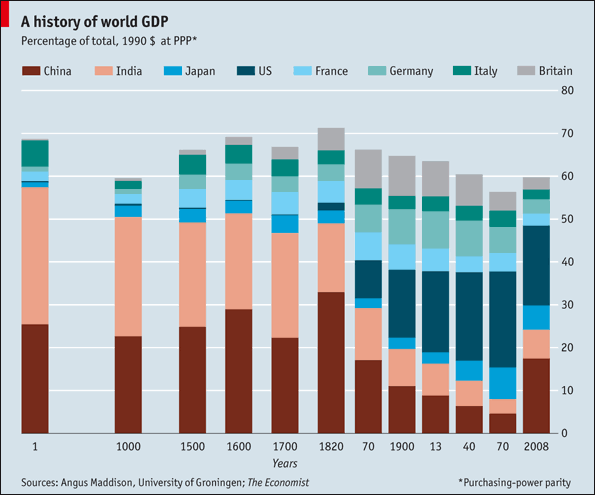
British economist and historian Angus Madison was commissioned by the Organisation for Economic Cooperation and Development — OECD to write the economic history of the world. He collected Data of production and trade of 2000 years of the whole world and published it in a momentous book titled ‘Economic History of the world – Millennial perspective’. As conclusions of this extensive research, he stated that for the first 15 centuries of the common era Bharat was undoubtedly the most prosperous country. Chinese Data though not very reliable, looked comparable with Bharat for next two centuries. One of the estimates put Bharat’s share in the world production for first 15 centuries of the common era at 30-46% though due to large population per capita income was not very attractive. After the so-called Industrial Revolution also, Bharat remained more prosperous than Europe and America till the beginning of 19th century CE. Madison’s stats state that Bharat’s contribution before the stabilisation of British rule here was 23-25% of world GDP. This is in fact real ‘Hindu Rate of Growth’.

Bharat was prosperous as well as cultured till she followed the Eternal Economic Model. Famine, poverty and hunger were the result of the foreign model thrusted by the evaders after destroying the Bharatiya traditions. When Bharat achieved Independence by throwing out the British, her share in the world production was mere 2%. Even after independence, the economic system was run on the same western model which was responsible for destruction of our prosperous practices and with the audacity to create the narrative of shifting blame on the eternal principles in the name of ‘Hindu Rate of Growth’. It is very clear from the accounts of travellers like Herodotus and Megasthenes from the time before common era to some honest officers of the British Rule, that Bharat was most prosperous country in the whole world till she practiced the real Hindu Economic Model. Trade with the whole world by naval and surface transport was also leading in the world at that time. This enormous development is in fact ‘Hindu Rate of Growth’.
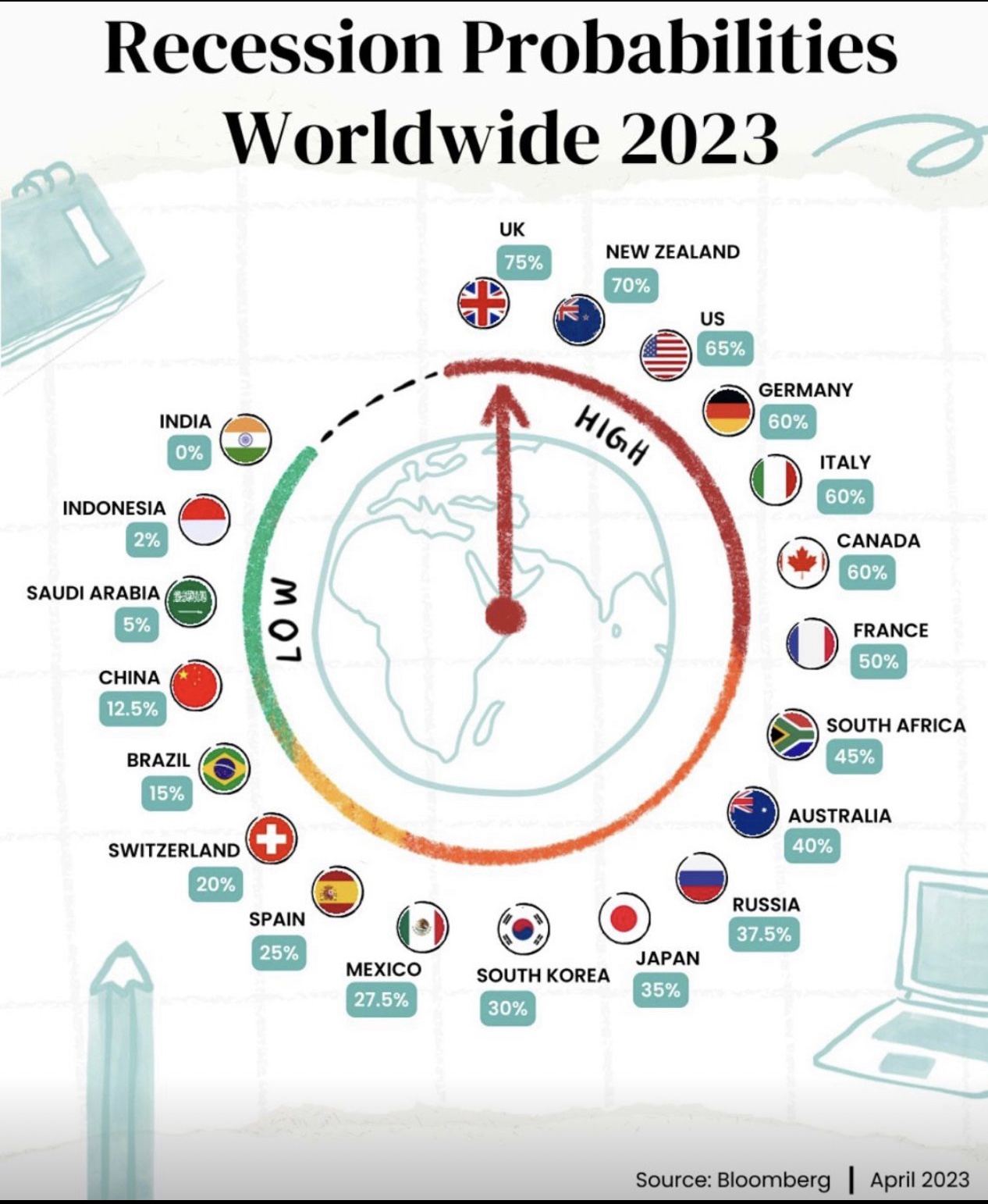
When the whole world is on the brink of economic recession, Bharat which has awakened to its eternal cultural strength with pride is considered most secure and less vulnerable to the possibility of recession. For saving the world from eminent economic meltdown, it is imperative to study methodically the Future Hindu Rate of Growth.

Hindu polity is all-inclusive which has amazing ability to accommodate everyone.
The article reflects this sentiment in the best possible way.
Awesome thoughts!, the EDM-2 is a model worth considering. Jai Hind.
आदरणीय दादा, यह महत्वपूर्ण लेख हम सब हिन्दू और हिंदुस्तानियों के लिए पठनीय और विचारणीय है। साझा भी कर रहा हूँ। आदरणीय
सादर प्रणाम।
पथपरदर्शक एवं ज्ञानवर्धक
Nice work
Economic history of Bharat should be also written by Bhartiya scholar of Economics.