

Eternal Development Model – 4
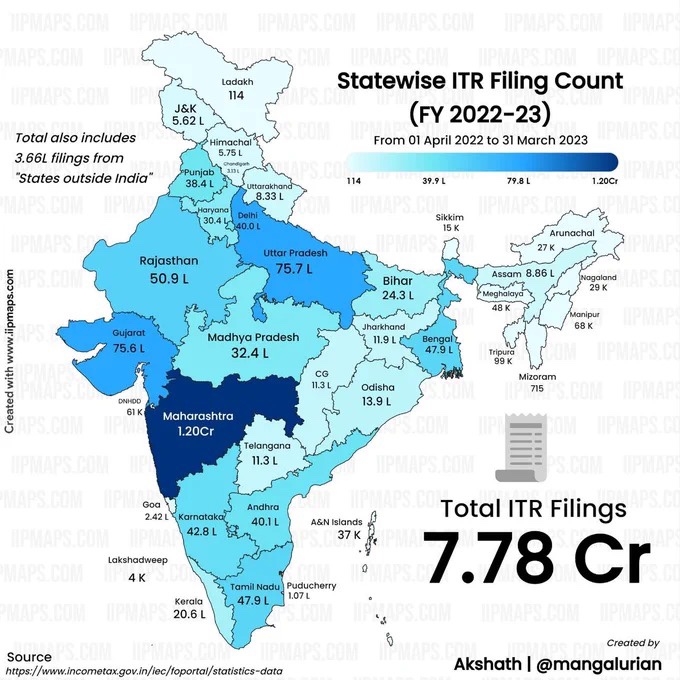
The prosperous history of Bharat based on its intrinsic entrepreneurial spirit is now well accepted. Bharat has not only been the leading producer, developed and happy Rashtra (Nation) for the most periods of known history of mankind but she also benefited the whole world of its industriousness through unparalleled trade and marketing practices. The glorious narration of Bharat’s grand achievements on the background of other failed global models is not for self-glorification. It is an attempt to find permanent solutions to the complexities of the present times by applying the lessons learnt. The purpose of these historical musings is to evolve a contemporary development model by applying the eternal principles of Sanatana Dharma whose economic manifestation had been responsible for the Eco friendly, omni-benevolent, non-exploiting, equanimous prosperity for ages in Bharat.
Thus, only those topics are being discussed which are useful in providing solutions at present times. There is no superiority complex that ‘Everything ancient is ideal’. Our ancestors have also committed historical blunders. We had to face political, military challenges and engage in constant struggle for centuries due to these mistakes and many pious vices (Sadguna Vikriti). As a result, some perverted barbaric invaders ruled for a limited period over a large part of the country. This living Sanskriti (Culture) never gave up and did not allow the invaders to rule peacefully even for a day. Present intellectual exercise of evolving an eternal model by analysing the Artha (productive efforts) based on Dharma (Sustainability) has very little scope of the above-mentioned glorious epoch of continuous freedom struggle. Thus, the mistakes are not being dealt in details but a brief mention of these blunders may help in avoiding repetitions.

Lack of Alert Society: Security is equally important to prosperity. When the society shirks the collective responsibility of national security and depends completely on the political power and defense forces, it becomes vulnerable when these two are corrupt, greedy, lazy or plain arrogant. This was the reason that at its peak of prosperity, the Magadha Empire under Dhanananda could not show farsightedness to preempt the campaign of Alexander at the borders of Kaikeya. Acharya Chanakya’s creation of an integrated Maurya Empire out of the lessons learnt from this blunder and subsequent codification of the process in Kautilya’s Arthashastra is a source of immense knowledge today. With growing economy, it becomes essential that the society and especially the intellectuals become proactively aware of challenges to the security along with the government and the intelligence agencies. Establishment has limitations due to limited and biased feedback resulting in distorted evaluation. Unpopular disciplinary policies become difficult in a democracy and on the other hand with the compulsion of public endorsements every five years, superlative exhibition becomes necessary. In such situations, the alertness of the intellectual leadership becomes essential. Unselfish, detached and dedicated Acharyas like Chanakya can maintain this intellectual awareness in the society. This is most relevant today as alert participation of the society is most important factor of any development model.

Lack of Understanding the Enemy: Judging the enemy with our own moral standards has always proved fatal for Bharat. Battles were also fought virtuously. Dharmayuddha in Bharat does not mean battle for religion, it means a just battle fought with moral rules. Right from Prithviraj Chauhan granting clemency to cruel Ghori and King Samudrin welcoming the Portuguese Pirate Vasco-da-Gama with open arms, Bharat always paid a steep price in the form of hundred thousand martyrs and decades of alien rule by failing to understand the cruel and fraudulent nature of the enemy. There are very few ideal leaders like Chhatrapati Shivaji Maharaj who understood the enemy well and dealt with them accordingly. This foe-knowledge helped him establish Hindavi Samrajya (Empire) in a land encircled by 5 shahis (Islamic rulers). He was well aware of the British cunningness. While purchasing the advanced artillery guns from the European manufacturers, keeping the future self-reliance in mind, he gave preference to the Dutch as they agreed for technology transfer and training along with supply of guns instead of British who were not ready to give technology and training. Not learning from Shivaji, the modern leaders purchased Howitzer Gun from bofors company motivated by kickbacks. During the peak of the Kargil war, the company denied continuous supply of ammunition of this proprietary gun, stating that the particular design has been discontinued by the company. There was no technology transfer yet the reverse engineering talent of Bharatiya Ordinance Factories ensured the security of our borders by managing urgent production of ammunition modified from the more advanced DRDO designed gun that was neglected during Bofors tender.
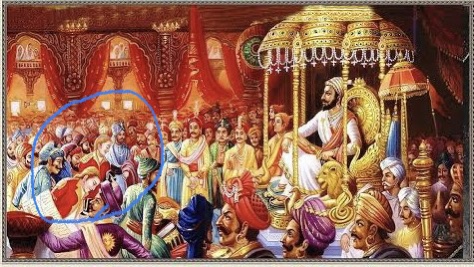
Even after repeated negative experiences, this pious vice (Sadgun Vikriti) still persists widely in Hindus. Bharatiya markets are flooded with the goods manufactured by the neighbouring country which constantly bleeds the Himalayas by attacking our brave soldiers. This happens because the selfish greed of saving a few Rupees supersedes the need of strategic thinking by the Hindus. Measures like 200% custom duty and ban on finished electronic goods by the government is not enough. When the whole society becomes aware of the enemy designs and responds by simple sacrifices, the enemy changes its attitude. The understanding of Enemy nature is one of the important factors of evolving Eternal Development Model.
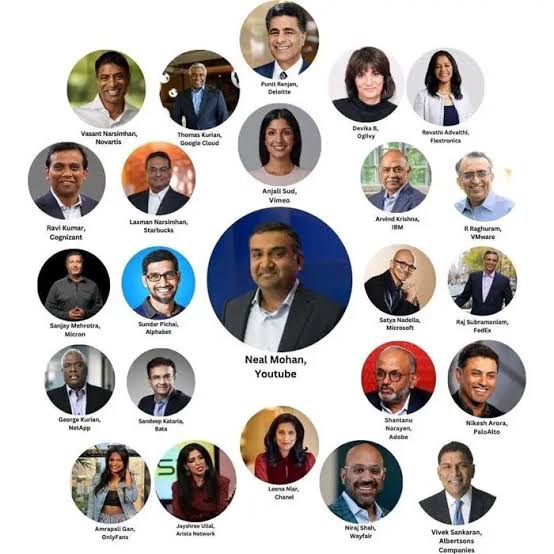
Lethargy and Jealousy: Luxuries and amenities of prosperous society along with complacency gives rise to unnecessary competition, jealousy and superficial parameters of prestige and status. This has always been very lethal for Hindus. Most of the invaders were invited and assisted by traitors like Ambhi, Jaychand, Mansingh and Meer Jafar. Even today, unwanted competition and jealousy is an impediment in development, both political and economic. Society under the influence of politicians and media confused by impractical usage of socialism create an anti-national atmosphere out of impotent jealousy. For example, all the media and even the social media or messenger services glorify the increasing number of more than 50 CEOs of big multinational companies of the world being of Bharatiya origin. However well paid or glamorous it may be, but after all they are employees only. The corporates paying them multimillion dollars package earn billions exploiting their talent and work. Their glorification in Bharatiya media is also a marketing stunt to boost sales here. The society enamoured by this propaganda starts envying the big Bharatiya entrepreneurs unnecessarily criticising them in public life while feeling proud on the slave employees, essentially the selfish cowards choosing easier options abroad instead of struggling for Nation Building. These Bharatiya industrialists create thousands of jobs domestically and provide strategic advantage by their investments abroad. Only these big Bharatiya multinationals have the capacity of giving tough competition to the expansionist investment designs of China in our neighbouring countries like Nepal and Sri Lanka. These oft targeted entrepreneurs along with PSUs are catering to the national economic interests in the friendly countries of Africa and Latin America. One such example is the Greek ports being developed by Adani ports which is set to become nerve Centre of Bharatiya trade in Europe. Unjust glorification or neglect of legal irregularities of these corporates is not expected just because they are Bharatiya. But on the other hand, hailing their just achievements through media and social media will prompt entrepreneurial spirit in the country. This has been the secret of age-old economic supremacy of Bharat in the whole world.
Lack of clarity of Friendship: Hindus lack strategic thinking completely. Hence, our idea of friendship depends on civility, common interest or sometimes even common vices and addictions. Not just at the individual level but at collective and national level, this lacuna of selecting proper friends have proven detrimental historically. Many times, friendship with foes of the nation also results out of personal egos as well as collective identities like family, caste, language. Raja Mansingh of Amer not just aligned with Akbar but led the campaign on homeland out of perverted concept of insult by Maharana Pratap. He could not see the larger insult of the Family in his treachery. Many such examples of misplaced friendship are evident even now.
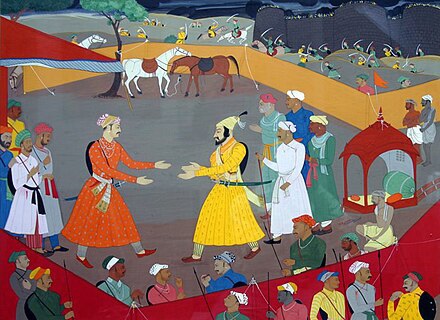
In this regard also Chhatrapati Shivaji’s conduct is exemplary. When Mirzaraje Jaisingh was dispatched by Aurangzeb to lead the campaign on Hindavi Swarajya, Shivaji wrote a letter to him with a very emotional appeal of friendship. That letter provides us parameters of friendship with national interest in mind. He very clearly warns him of the ills, sins and blot of fighting with own kins at behest of an alien ruler, rousing feelings for country and dharma. Then appeals to him to utilise his valour in favour of freedom and Hindavi Swarajya. He offers him leadership in such situation. This is a grand example of extent of highest sacrifice for the good of the country. His friendship is not just limited to the appeal in the letter. Though Jaisingh did not accept the offer out of misplaced loyalty, Shivaji avoided the bloodshed of Hindus on both sides and entered treaty with him and agreed to visit the Agra court of Aurangzeb. If Jaisingh had realised the friendship borne out of National interest, the history of Bharat would have taken very positively different turn. In evolving of Eternal Development Model, it is imperative to learn from these historical mistakes.
Lack of unconditional faith in the leader: The positive image of Dharmik faith in trade was created by our great traders all over the globe through generous and honest practices. The stories of great naval traders are very popular in many parts of the world. They were considered honest, firm on their word, perfect in accounting and most reliable partners. Many accounts of son honouring the debt even after father’s death are available in popular discourse in many countries. Even today, there are many proverbs in various languages of the world glorifying the accountability of the Hindus. There is a saying in Japanese — Hindu never tells a lie. The absence of this loyalty or faith in the political sector was the reason for Bharat’s defeat against the invaders.

This faith in leadership has been found missing at many crucial junctures in history. Both the wars of Panipat were lost because of this. The leaders have to take many unpopular decisions, have to strategically retreat for final assault. This is a test of the patience of the followers and society at large. Many followers could not digest Shivaji’s strategy of hiding in Pratapgarh even after Afzal destroyed the temples of Maa Bhavani in Tuljapur and Vitthal mandir in Pandharpur. Many were vocal in opposition and some lost faith and joined the enemy. But the majority Mavla Cadre remained loyal to their King Shivaji and kept the formation. On this strength, Shivaji could offer the sacrifice of Afzal at the feet of Mother Bhavani, win back the lost forts and even rebuild the destroyed temples within two months. In Economic sector also, the leader has to take temporarily strict decisions for long term good. In democracy, people need to have full faith in the leader for taking unpopular decisions. The success of Japan, Germany and China in the past is due to unconditional support of the people. We as a nation and society need to develop this attribute.


Social Division and Inequality: As a side effect of prosperity, society got divided. Expected assured success and natural continuity of skills perpetuated into family professions. Gradually this changeable Varna system degraded into fixed Jati-upajatis. As the constant social and intellectual refinement got disturbed due to struggle with invaders, this professional system degraded to a divisive social hierarchy at some places and into untouchability in a few instances. Many fighter communities were forced to carry excreta and thrown out of the villages as they did not convert to Islam. Thus, these differences became cause of social divide and economic inequality. Even discounting the exaggeration by biased authors and considering absence of any textual sanctions by religious texts, the presence of social inequality cannot be completely denied. The findings of British Survey of education in Bharat during Yugabda 4925-4932 (1823-1830 CE) brought to light by Dharmapal ji after rigorous research of primary sources from British archives evidences that till then, education was available to all and literacy was almost 100%. Though it is a fact that British education spread illiteracy in the majority community, blaming solely British for social divide and inequality will not be appropriate. Main point is that such blaming will be a hurdle in our quest for futuristic solutions. Understanding that ‘Inequality is diagonally opposite to progress’, efforts to attain unblemished equality is the proper way towards evolving Eternal Development Model.
Lot many blunders, blames and lacunae can be enlisted. But in the process of futuristic thinking on economic model, the self-evaluation to this extent is enough. The panacea of all these shortcomings is intimate oneness born out of integral principles of Sanatana and organic connectedness with the Virat Rashtra Purusha (Grand National Embodiment) as its limb.


भारतीय संस्कृति को देखने का एक अलग दृष्टि यह भी है।
सादर प्रणाम।