
Eternal Development Model – 3
उद्यमेन हि सिध्यन्ति कार्याणि न मनोरथैः ।
नहि सुप्तस्य सिंहस्य प्रविशन्ति मुखे मृगाः ॥
udyamena hi sidhyanti karyani na manorathaihi|
nahi suptasya sinhasya pravishanti mukhe mrigaha||

Works are accomplished by enterprise and not just by dreaming, just as the deer does not enter the mouth of a lion without efforts.
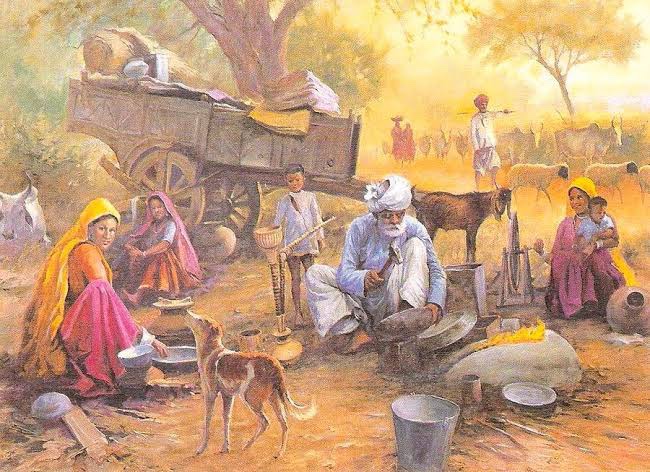
The importance of entrepreneurship is impressed upon the mind right from childhood in Bharat. The secret of Bharat being the wealthiest nation in the whole world in the known history loses in this born and cultivated entrepreneurship. Bharat has always been a manufacturing nation. The Sanskrit term Krishi is mostly associated with agriculture, but the root being Kri meaning action, its original meaning is manufacturing by active work. The word for husbandry in Sanskrit is Kshetra which naturally converted into Khet or Kheti in Hindi as Ksha in Sanskrit many times becomes Kha in other languages. Farming has been regarded most important in Bharat as it is most basic production process converting a single seed thousand-fold. Most of the people, in fact, almost everyone is connected with farming directly or indirectly. Most of the city dwellers also have some connections with their farmlands in the village of origin. Yet husbandry was never the foundation of Bharatiya Economy. It was always manufacturing artisanry. Hence, when we say Bharat was predominantly Krishi based economy, we mean manufacturing.

Most of the produce of husbandry, cattle-farming, fisheries etc. such as food grains, vegetables, fruits, milk, buttermilk, fishes and flesh meaning all types of eatables were never sold but distributed free. Hence, food production was for self-sustenance and nourishment of all. From the agricultural produces, only raw material for other products such as cotton, jute or silk for clothes and apparel, wood, cane and bamboo for furniture and spices were commercial goods. Thus, husbandry was the support of society but Krishi, that is manufacturing, was the foundation of economic production. Artisans were most respected in the society. They were called Shreshthi in Sanskrit, literally meaning ‘Great’ acclaiming their perfectionist attitude. Loomers, blacksmiths, goldsmiths, carpenters, sculptors were makers of our economic proficiency. These were classified in Vaishya varna in the social order. Traders who marketed these products all over the world were also important pillars of global dominance of Bharatiya economy through ages. Bhagavad Gita and Agnipuran states – krishi goraksha vanijya vaishya karma swabhaavajam – meaning manufacturing, animal husbandry and marketing were the natural professions of Vaishya Varna (Producer Class). Mining and products made out of minerals have been a major part of Bharatiya Industry. Bharat has been contributing maximum in the large part of known history due to this entrepreneurial spirit of the Hindus.
The careful study of accounts of travellers visiting this land from time ranging from 3 to 5 centuries before CE concludes that Bharat’s prosperity was enterprise inspired. This industrial impetus prompted the advancement of science and technology. Bharat was ahead of the whole world in these fields also. The misconception deliberately born out of misinformation that earlier, this was the land of snake charmers and black magicians and science was introduced here after the European colonisation, is a white lie. The travelogues of the foreigners and other documents prove otherwise. The fact is that if Bharat was never colonised politically, not just Bharat, but the whole world would have been more advanced in science and technology than it is today, that too in a Sustainable and Eco-friendly way.
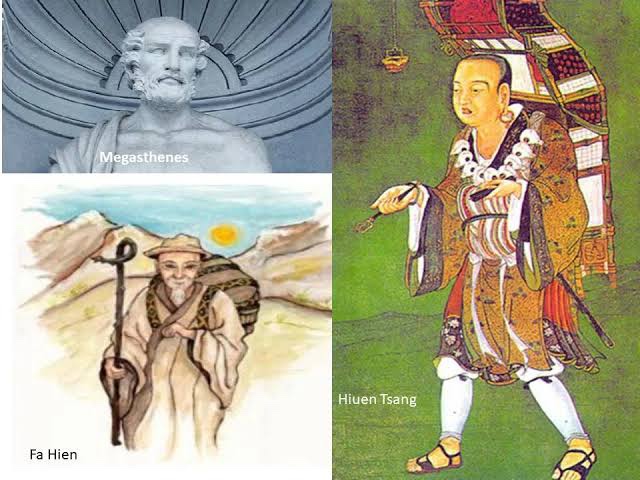
Megasthenes, the ambassador of Greek Emperor Salukis in his book written 2500 years ago titled ‘Indica’, elaborated about miraculous advancement of Bharat in the fields of architecture, navigation, medicine etc. The foreign travellers used to wonder at the marvels of Bharatiya Technology, same as our people are impressed by the architecture of places like Dubai etc. Italian traveler Ptolemy wrote – the buildings here are so tall and multi-storeyed that the hat drops while looking at the top. Deimachus and other travellers who visited in the same period have extolled the marvelous wonders of technological progress of Bharat in various fields such as metallurgy, surgery etc. Venetian traveler Nicolo Conti who visited the Vijayanagara empire has described the unprecedented wealth exhibited there. Even today when one visits the remains in Hampi, there are ruins of almost 2 km long double-storeyed market in front of all the three large temples. Conti’s accounts have descriptions that various valuable stones like diamonds and pearls were sold in kilograms in these malls. This prosperity was evident till the 17-18th century.
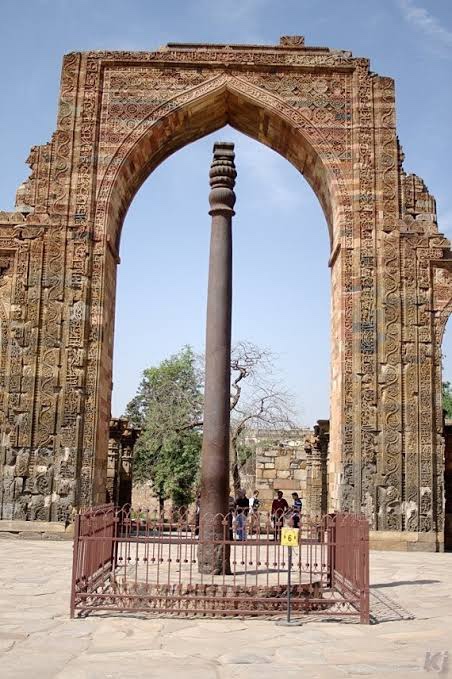
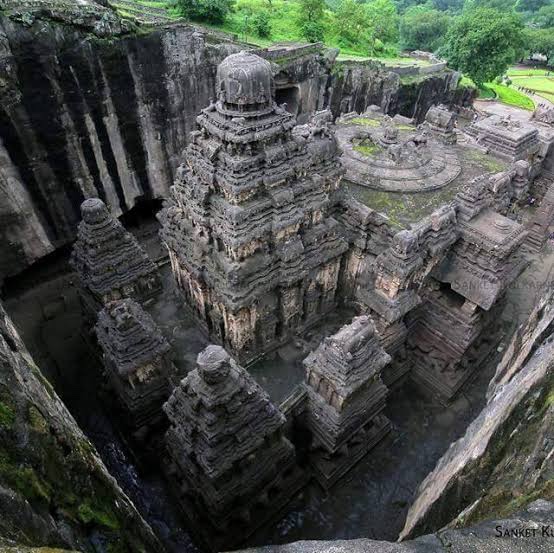
Persian scholar al-Biruni travelled here with Muhammad Ghazni. He is considered the pioneer of BharatVidya (Indology) because of the detailed explanation in his account titled – ‘Tarikh-Al-Hind’. Along with the essence of shastra granthas, status of society there is a long narration of the architectural wonders of temples of that time. These facts were either ignored or plainly denied by first, the European historians and then the Marxist ideologues masquerading as scholars after independence out of sheer disbelief termed as exaggeration or refusing to accept that Europe was nowhere near Bharat economically or technologically. The recent findings have established it beyond doubt that Bharat was way ahead of the rest of the world at that time in many fields of technology including architecture, metallurgy, weapons manufacturing, navigation etc. The alloy used in the rust-free steel victory-pillar of Chandragupta still standing proudly at Mehrauli temple complex remains in Delhi, the construction technology and instruments used in building the great temples like Kailasha and Brihadeshwara temples are still unmatched by the modern technologies. The travelogues of Moroccan Ibn Batuta and many other Muslim travellers must be used for studying the social, scientific and economical status of Bharat at that time and not just for the political and military history.


The Chinese travellers including Faxian and Xuanzang were of Buddhist origin and hence were interested in knowledge seeking. Hence, their accounts are referred for Buddhist history and the descriptions of great Universities at Nalanda and Vallabhi. Along with these oft-quoted facts, these extensive writings should also be well utilised for research in society, administration, governance and economic systems of the time. Though not recognised aptly for political reasons, lot of work is done by unbiased historians but much more is awaited. These Chinese are witness to the Golden period of Bharatiya History and have narrated astonishing facts about the wealth and prosperity of the country as they visited during the glorious rules of Harsha and Chandragupta Vikramaditya. The economic analysis of this period of history today will assist greatly in evolving the Eternal Development Model today.

There are many legends about the Italian traveller Marco Polo. His voyage to China and Bharat via the silk route is considered imaginary by many historians. Absence of many important facts including the Great Wall of China and mentions of many famous places in Bharat without exact names of villages etc. are cited as reasons for disbelief. One such half-baked mention of tomb of Saint Thomas helps in keeping the myth of this missionary alive. Due to this Christian influence, some historians have tried to establish Marco Polo’s travels as true. But there are many contradictions in both the myths about travels of Saint Thomas and Marco Polo. The earlier Christian narrative of the saint claim his burial out of Bharat on a hill, but Marco Polo’s compendium places it in an unnamed village on the seashore. Roman and Italian Christian’s differ but still try to put a name to the village – Mylapore to assist their Evangelical designs in Bharat. Genuine and unbiased European historians infer that Marco Polo never left Constantinople. His book is based on tales heard from visiting Hindu, Chinese and Arabic travellers. It may be his literary style of writing in first person that stabilised the myth of his travels. Whatever may be the case based on hearsay rather than first-hand experience, ‘The Book of Marco Polo’ gives many unbelievable accounts of Bharat’s prosperity. It is advisable to avoid such controversial source in research aimed at evolving a futuristic paradigm. But researches may use it as corroborative source in their study to confirm the facts concluded from primary sources.

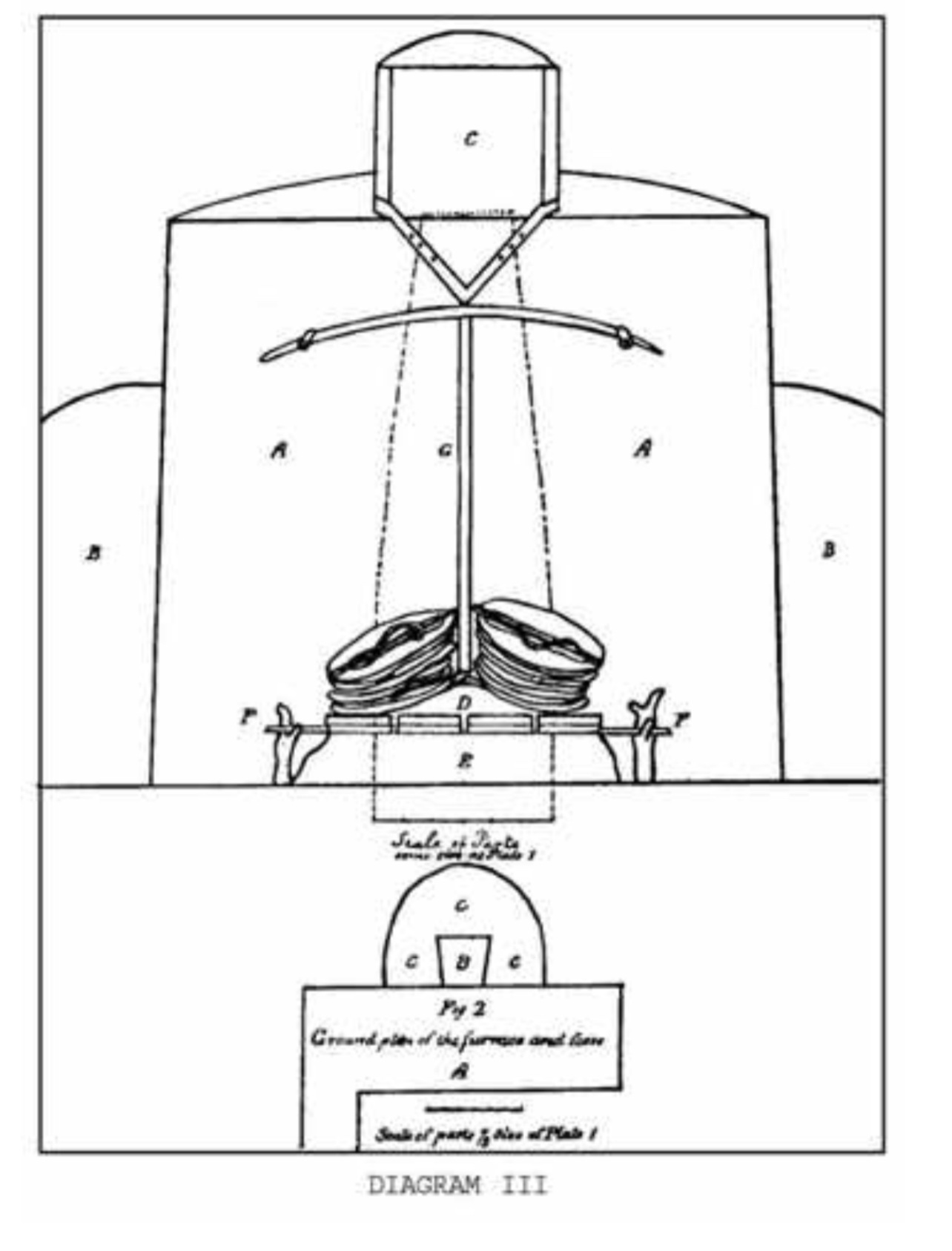
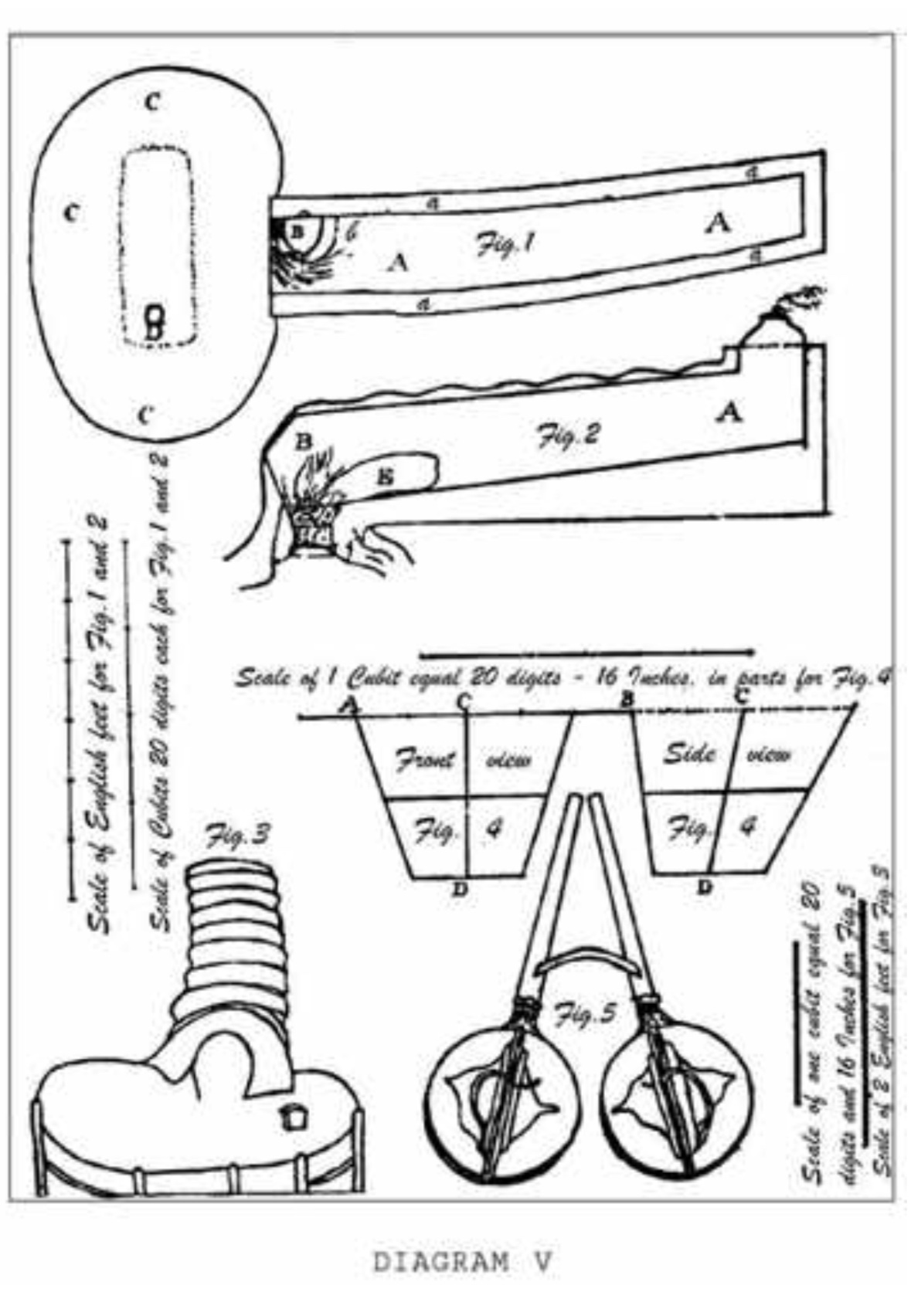
Shri Dharmapal wrote a book titled ‘Science and Technology in 18-19th Century India’ based on primary sources collected laboriously from the British archives. It contains many papers written by British Military officers elaborating astonishing advances practiced in Bharat. Lt. Col. Ironside in a paper authored in 1774CE writes about clothes and paper making technology with lots of illustrations. Maj. Gen. Alexander Walker writes in 1820CE about the advanced implements used in farming. This army officer describes with a lot of respect the detailed production techniques of making user friendly and effective ploughs, tillers and many other agricultural machineries. Maj. James Franklin of Bengal Army in a paper about ‘Iron extraction in Central Provinces’ catalogued in 1829CE elaborates the process of iron ore mining, refining, purification with detailed designs of the instruments used and the foundries built specifically for this process. Captain Campbell wrote an equally researched paper in 1842CE about iron production in the southern part of the country. Both have compared the process, technology and costing with that in Britain and Europe and concluded that the Bharatiya method was more advanced, efficient and cost effective.
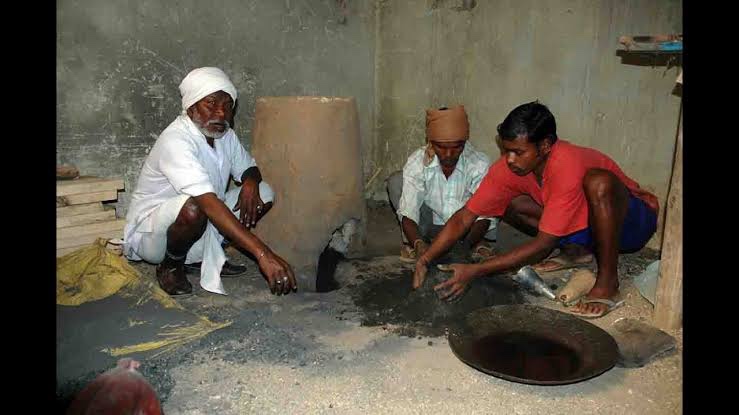
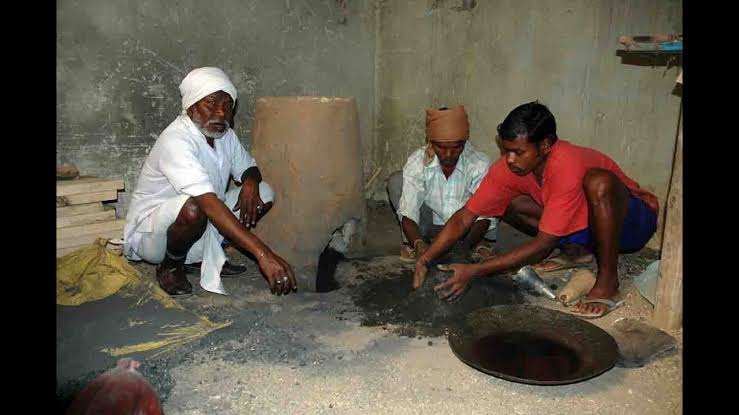
Based on first-hand experience of Megasthanese to the documented primary source data collected rigorously by Shri. Dharmapal, it can be undoubtedly concluded that before being destroyed by the British colonisation and education, Bharat was most advanced, prosperous society in the world for most of the period of known history. With clandestine conspiracy, the British deliberately destroyed this village based, decentralised, self-reliant and skill labour respecting manufacturing economic system. Technology was pirated enormously. The indirect contribution of Bharat in European Industrial Revolution is not just a matter of academic research but rather an issue of Criminal Investigation. Many traditional skill expert artisan communities were forced to migrate deep into forests. Many proud, industrious artisan communities who were foundations of village and city economies till the 18th century are today scheduled as forest dwelling tribes. Gadiya Luhar, Agariya, Asur are some such most talented blacksmith communities found all over the country even today. Many have still preserved the genetic talents and professions. On the other hand, the Lethal British impact can be still witnessed in many sectors like textiles, medical, advanced mathematics and astronomy, agriculture etc.
At the time of independence, the GDP share of Bharat was reduced to mere 2%. Spirit of Self-reliance and entrepreneurship had eroded from the society and employment meant salaried job. The revered social prestige hierarchy of product best, trade medium and employment worst had reversed on its head. In the evolving of Eternal Development Model for the present times, important role of enterprise and manufacturing must be underlined. Emphasis on Self-employment over jobs and manufacturing over services is the backbone of national prosperity.

यह हमे कई साल पहले इस मॉडल को अपना चाहिये था मगर अपने विकास का नीती हमे कहा ले आई, जो आज मुश्किल है पैदा हुई है उसके के पीछे हमारे विकास के लिये अपना गये गलत मॉडल ही माने जा सकते है. अब सुधार जरुरी हैं.
भारत की Roots आदि काल से सभी क्षेत्रों में यशस्वी रही हैं इसीलिए भारत केवल ज्ञान ही नहीं अपितु सभी क्षेत्रों में विश्व गुरु रहा है और आज भी है सदा सदा के लिए रहने भी वाला है । केवल भारत वासियों को सदैव स्मरण रहे इस हेतु recall होने के लिए ऐसे आलेख हम सभी तक पहुँचते रहें 🙏
बिलकुल सही कहा जी
इस तरह के और लेख भी जरुर भेजे जी
भारत का इतिहास अतीत से ही गोरवशाली रहा है। समय के साथ साथ विदेशी फिरंगियों ने अपने स्वार्थ सिद्ध हेतु भारत की सांस्कृतिक, सामाजिक और आर्थिक धरोहर को ना कि क्षत-विक्षत् किये अपितु अपनी जड़ें मजबूत करने हेतु अनेंकानेक हथकंडे भी अपनाये। स्वामी विवेकानंद जी को भी इन दो प्रश्रों ने परेशान किये। प्रथम यह कि पूरी दुनियाभर को भोजन देने वाला भारत भिखारी क्यों ? दूसरा प्रश्न यह कि पूरी दुनियाभर को ज्ञान देने वाला भारत गरीब क्यों ? इन तथ्यो को समझने हेतु यह प्रतिमान ना कि पर्याप्त है अपितु ज्ञान वर्धक भी।
माननीय मुकुल भैया जी को बधाई और उनकी लेखनी को प्रणाम।